
Explore the Grandeur of Art
Grand Manner: A Timeless Artistic Journey
Delve into the majestic world of Grand Manner paintings, where art transcends time and captures the essence of nobility and grace.
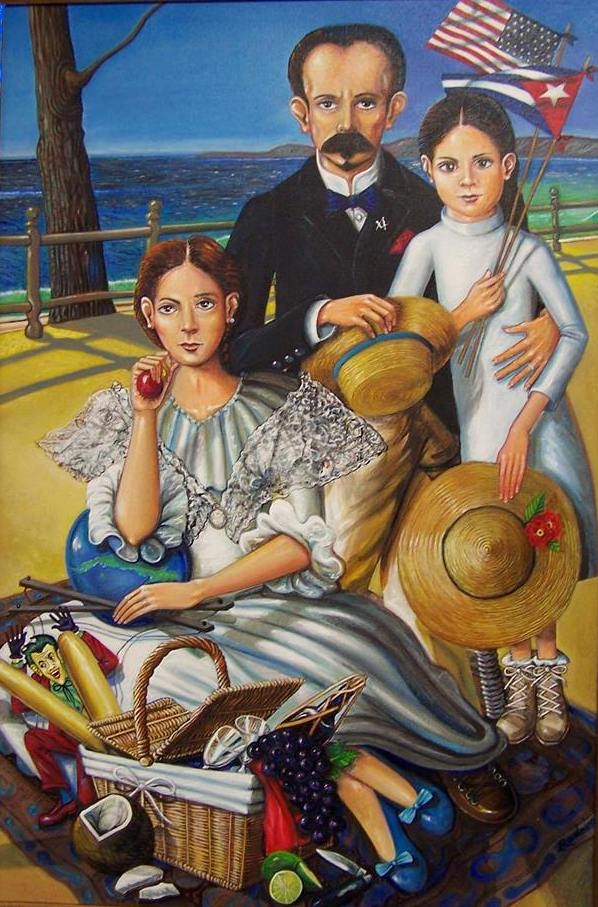
Masterpieces of the Grand Manner Collection
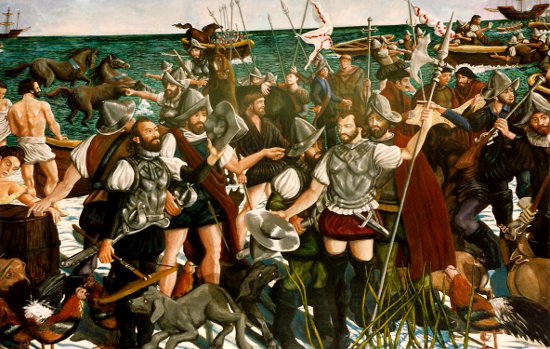
“The Landing of Hernando DeSoto in Tampa Bay in 1539,”
Tampa Convention Center (detail of the central panel 8’ x 4’), the whole mural is 24’ wide. oil-on-wood, installed in 1990 (Property of the City of Tampa). Tampa Convention Center, Tampa FL. This mural is the only grand manner depiction of DeSoto’s landing on May 30, 1539 at Piney Point, Tampa Bay, Florida.
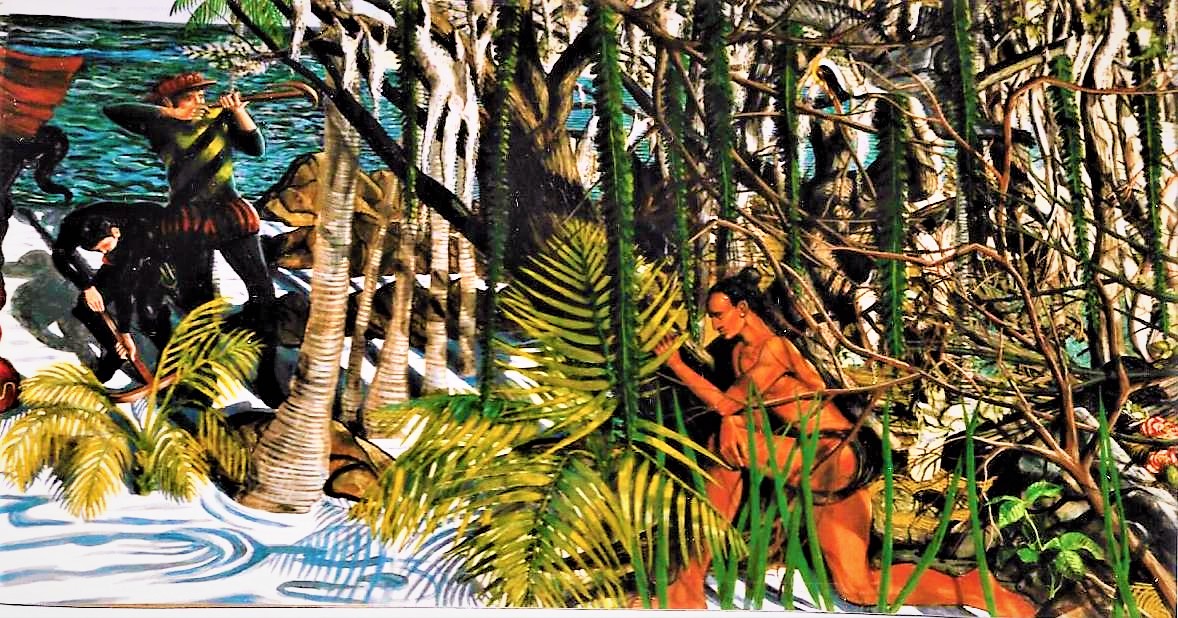
Detail of José Rodeiro mural “THE LANDING of HERNANDO DeSOTO in TAMPA BAY in 1539” oil-on-wood, installed in 1990 (Property of the City of Tampa). Tampa Convention Center, Tampa FL. In this panel, a Timucua scout observes the landing of DeSoto.
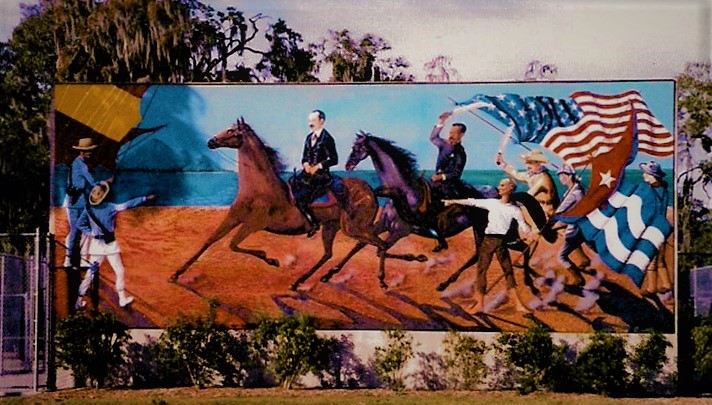
TAMPA THE CRADLE OF CUBAN INDEPENDENCE
MacFarlane Park. West Tampa, enamel-on-mdo, (Property of the City of Tampa), 40’ x 20,’1990.
“Picnic at Bath Beach,”
2016, oil on canvas. 30” x 40,” 2016.
(Collection of Aaron Fodiman & Margaret Word Burnside).
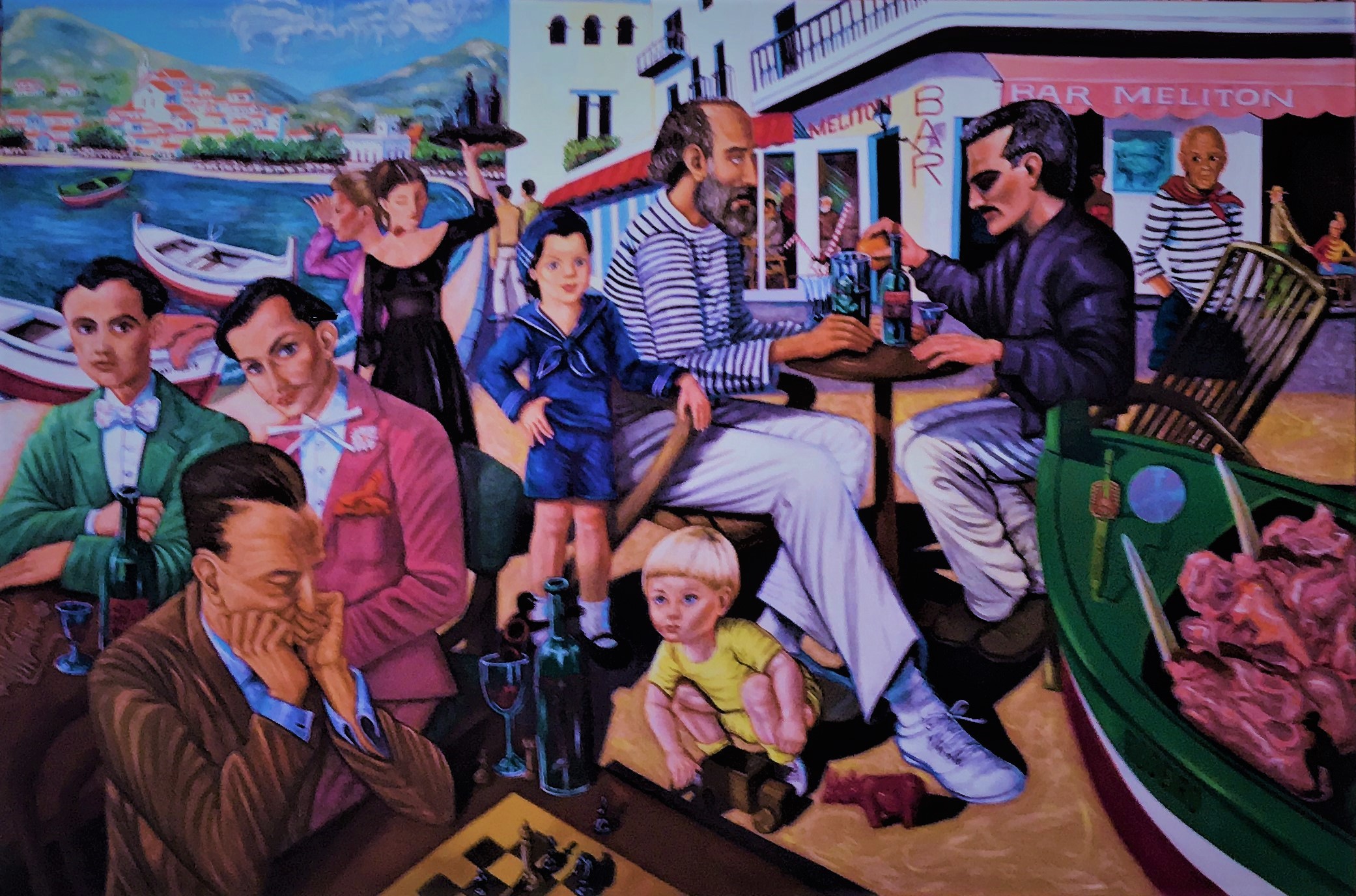
“WAITING FOR PICABIA (in Cadaques),”
oil-on-linen, 4’ x 6,’ 1998
(Collection of Joyce & Victoriano Martinez).
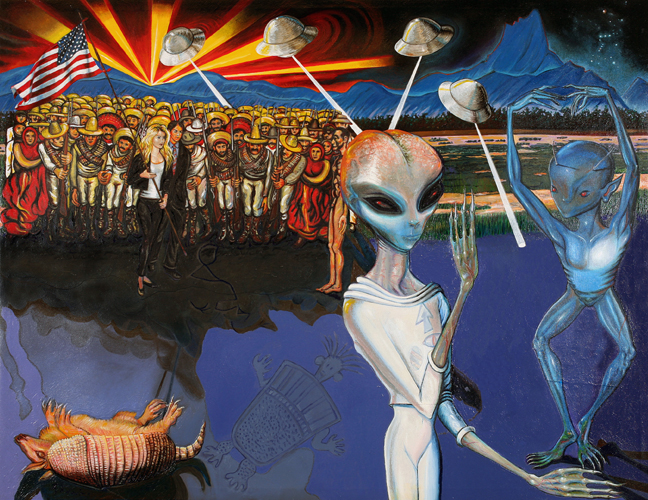
“Hips Don’t Lie (“Sonora Dawn”),”
Oil-on-canvas, 40″ x 30,” 2012.
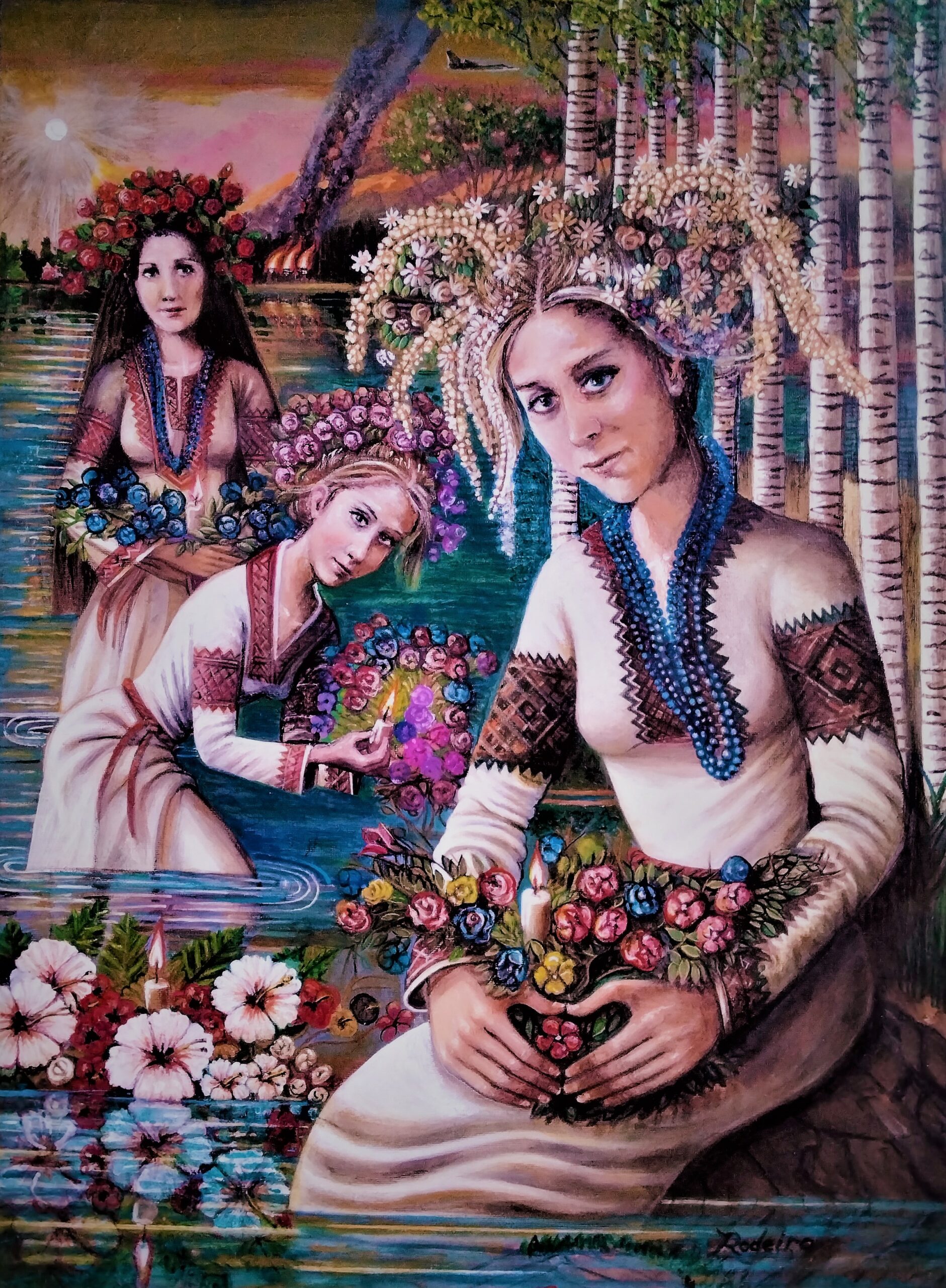
“Bombing Huts in Eastern Ukraine during Ivana-Kupala,”
oil on canvas, 18” x 24,” 2021.
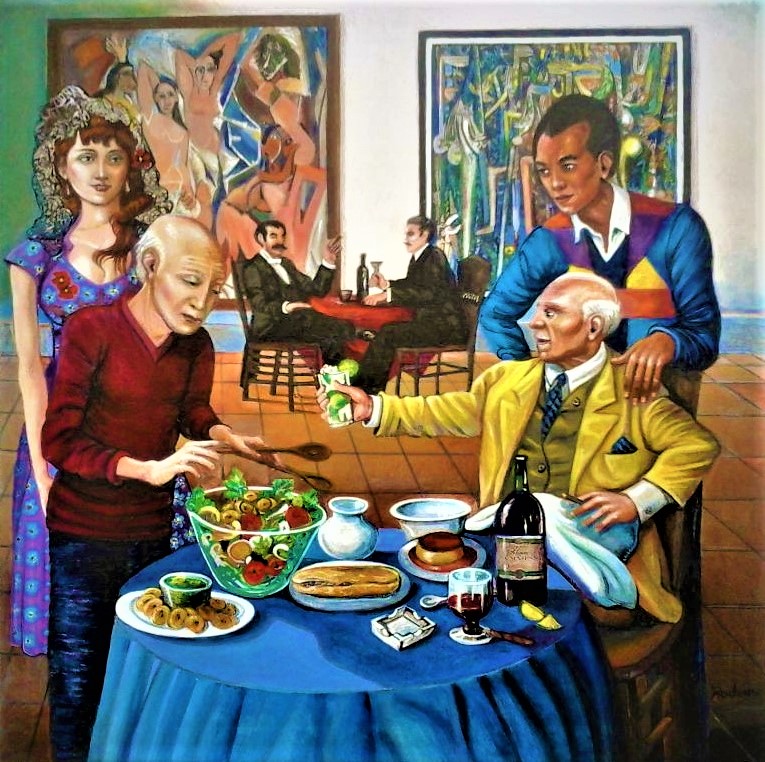
“Picasso Celebrating in Paris in 1953 with Françoise Gilot, Wifredo Lam, and George McNeil,”
oil on canvas, 20” x 20,” 2019,
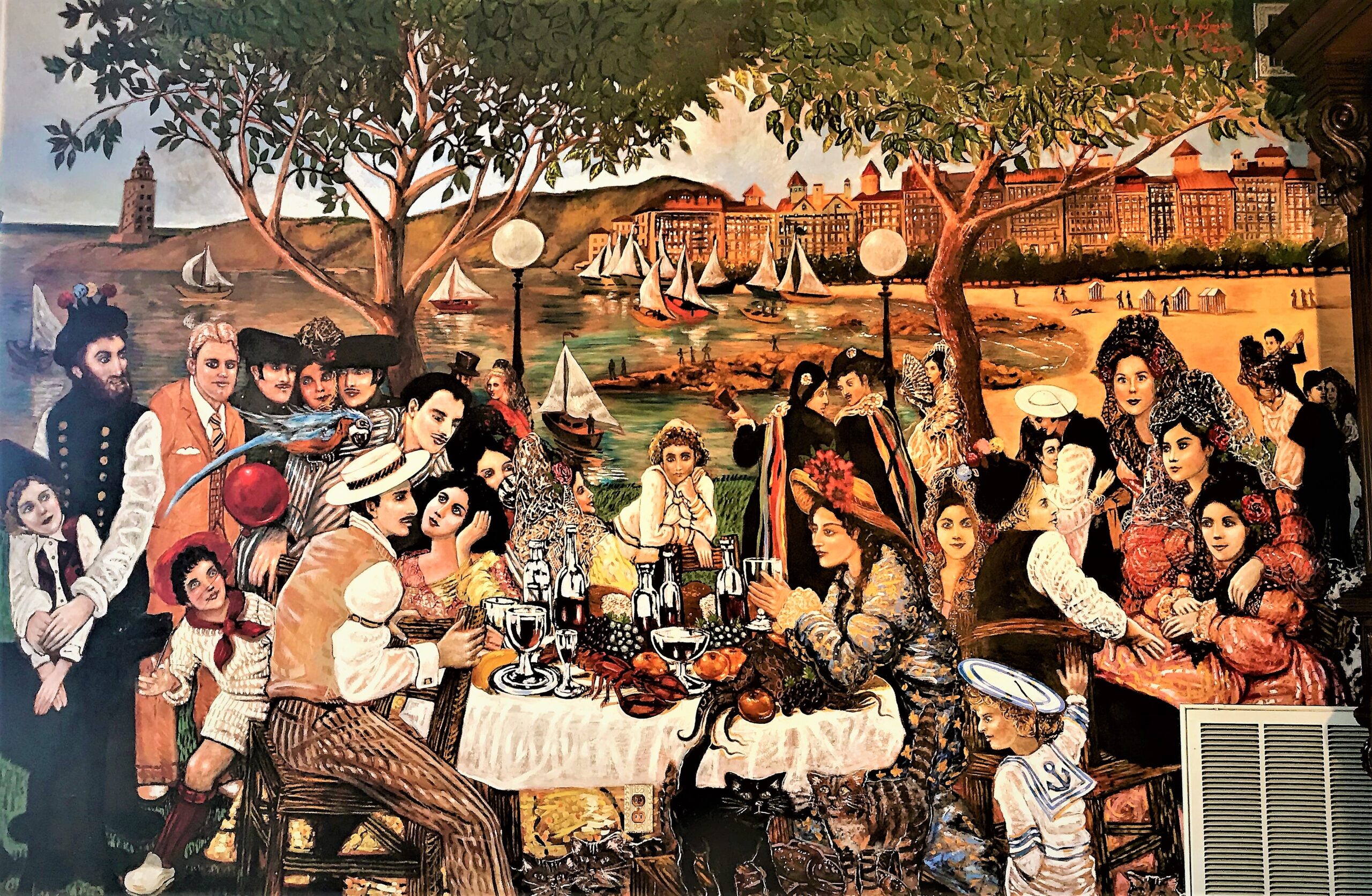
“Luncheon on Riazor Beach, La Coruña, Galicia, Spain.”
oil-on-wall, 10′ x 19.’ 1977, (Davis Island, Tampa, FL.).
Rodeiro’s “grand manner” mural “Luncheon on Riazor Beach, La Coruña, Galicia, Spain” displays a family picnic on the shore of Riazor Bay against the background of the Eiras promontory with its prominent 2000-year-old Roman “Tower of Hercules” lighthouse on Punta Eiras. Just beneath where the “Tower of Hercules” is painted, the artist (José Manuel Rodeiro) lovingly embraces a childlike version of his mother (Olga Perez Rodeiro) next to the artist is his grandfather Manuel Perez Garcia. Below him is a childlike version of his aunt (Jennie Rodeiro Sabin) holding a red balloon. Above the balloon with a parrot on his arm is the artist’s uncle (Robert Rodeiro) above the uncle are the faces of cousin Frank Rodriguez and his wife Magda along with Cousin Joe Sabin. Robert’s body arches over the artist’s parents, seated together at the edge of the table. In a white straw hat on his head and wearing a golden silk vest is the artist’s father Dr. José Antonio Rodeiro Martinez and next to him, gazing at Robert’s parrot, the artist’s mother Olga Sandra Perez Rodeiro (wife of Dr. J. A. Rodeiro). Behind them are the eyes of the artist’s great-grandmother (on his father’s side) Sophia Rodeiro Mira. And, just above Sophia beneath a streetlamp, chat Aunt Esther Rodeiro and Uncle Hannibal Rodeiro. Meanwhile, right next to Great Grandmother Sophia is the artist’s paternal Grandmother Juanita Martinez Rodeiro in profile. In the center of the composition gazing out at the viewer is the artist as an adolescent child dressed in white, on his right is Rosa “Cookie” Perez Valdez Ledon, the artist’s maternal grandmother wearing a straw sunhat with red flowers. Above Rosa’s flowered hat are two men dressed as “tunas” collegiate troubadours: the artist’s cousin Galen Jones Perez and his brother-in-law Victoriano Martinez. Just behind the tunas, is Cousin Cheryl Sanchez-Simmons fanning herself beneath a tree. Seated directly behind Grandmother Rosa is the artist’s younger sister Irene Hunter, gazing out at the viewer. Just below Irene, is a depiction of the artist as a toddler in a sailor suit looking at mischievous cats and dead octopi beneath the table. Just above the toddler with his back to Irene sits the artist’s cousin Galen Jones Perez; above him, we see the artist sister Irene dancing with Cousin Joe Sabin. Adjacent to the dancers are three female family members: at the top is the artist’s Aunt Norma Perez Jones, below Aunt Norma is the artist’s older sister Joyce Rodeiro Martinez, and his younger sister, Irene Rodeiro Hunter. Dancing on the beach are the artist’s Aunt Jennie Rodeiro Sabin and her husband Joe A. Sabin (aka “Tio Sabin”) who patiently taught the artist as a child how to play chess; below them dances the artist’s cousin Josefina “Josie” Buzzetti and her husband Albert Buzzetti.
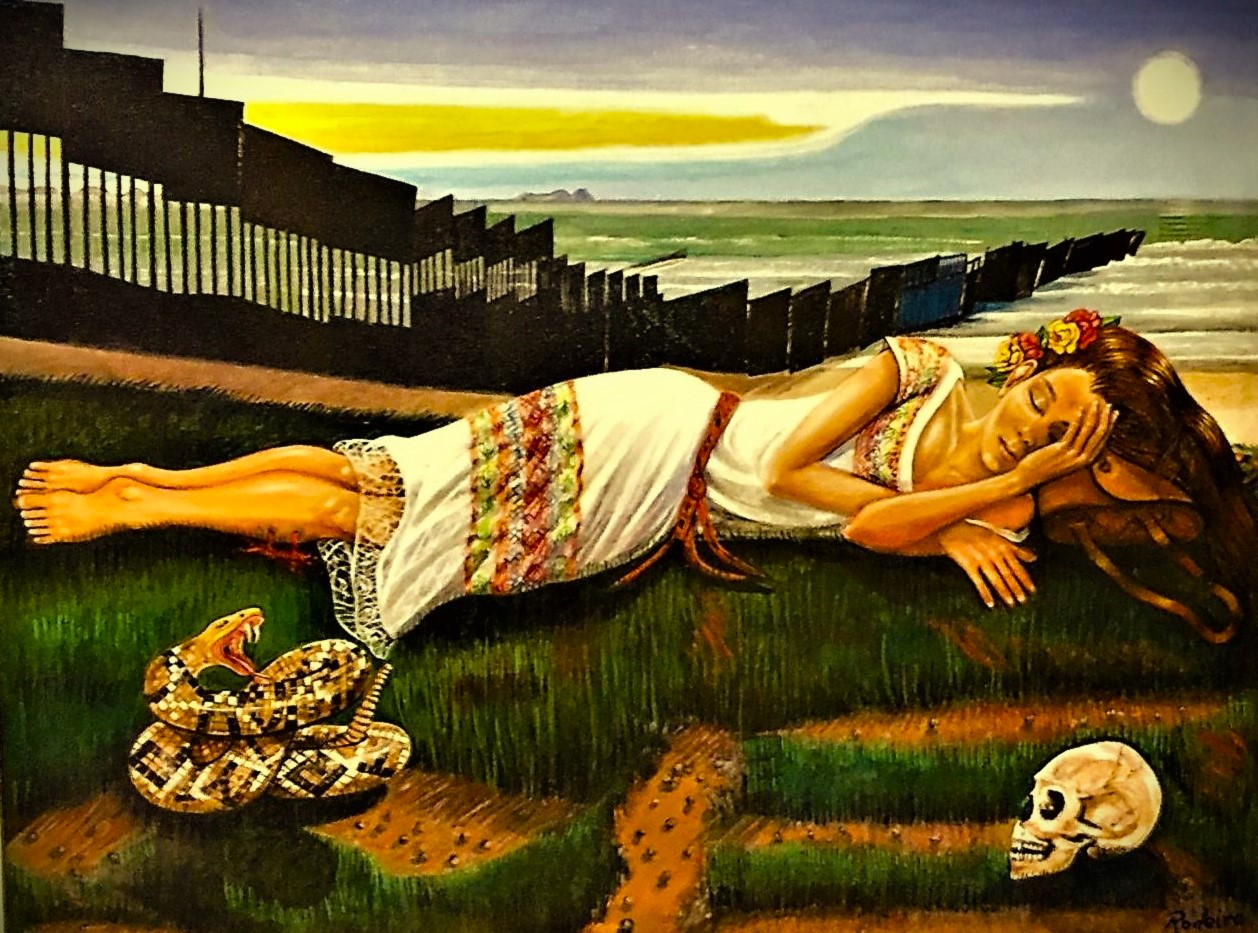
“The Pacific Border Wall,”
(oil-on-canvas, 16” x 20,” 2018).
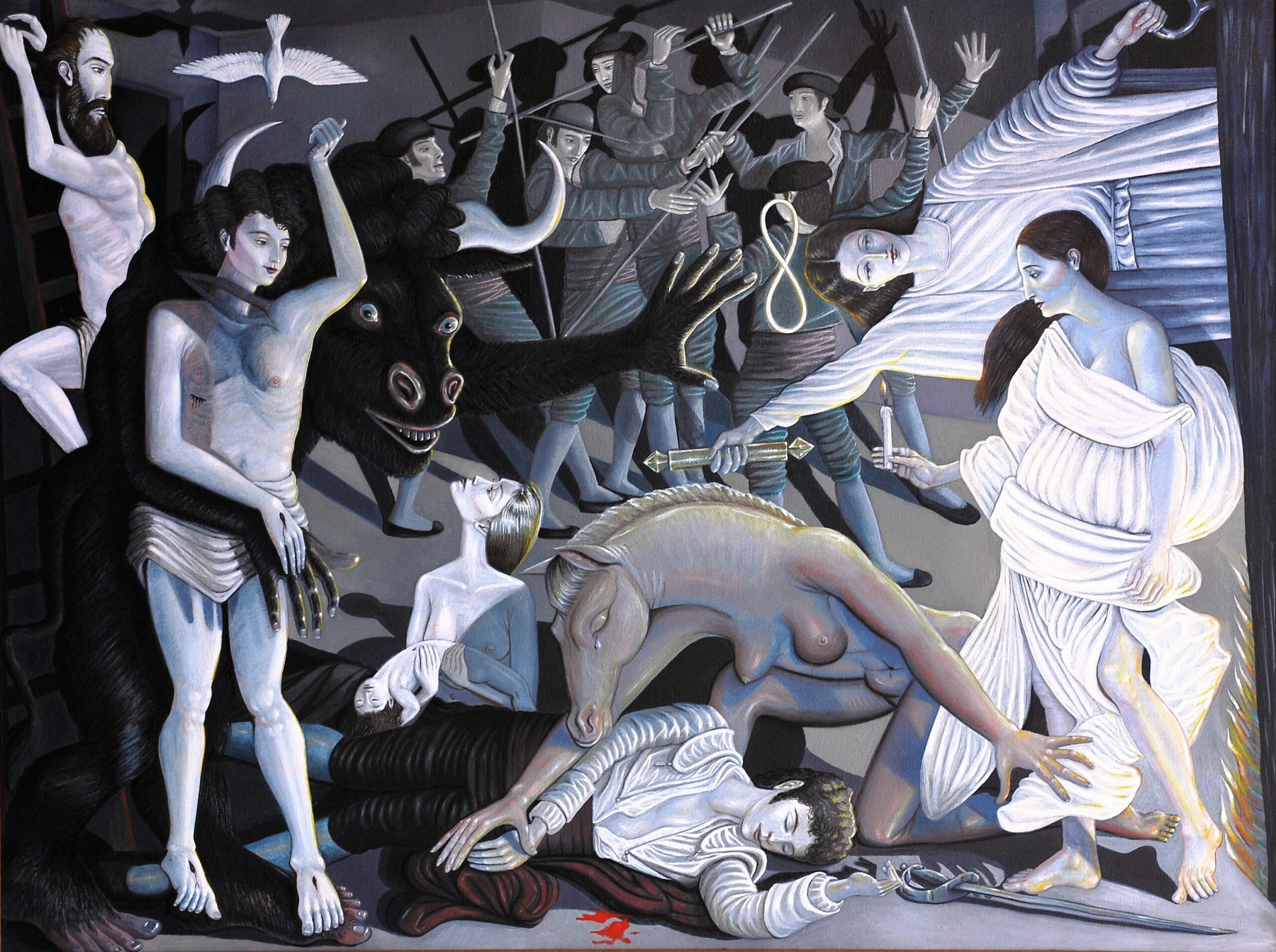
“9/11,”
oil-on-canvas, 56” x 48,” 2001.
The Essence of Grand Manner Art
The Grand Manner style is a celebration of classical ideals, characterized by its grandeur, elegance, and adherence to traditional techniques. This artistic approach elevates subjects to an idealized form, often depicting historical or mythological themes.
In the late-4th Century BCE, Apelles of Colophon (or Keos) invented grand manner painting. From Apelles to the present, academic painters in the classical tradition have adhered to the tenets of grand manner painting: grand subjects, epic narratives, and majestic themes, which the French Classical Baroque painter Nicolas Poussin affirmed in his treatise “Observations sur la peinture,” 1642 (first published by Bellori in 1672), exemplifying the grand manner as the highest achievement in two-dimensional art, because it requires epic (heroic) subjects painted in a grand style, employing a monumental composition populated by numerous figures visually dramatizing instantaneously a pivotal moment or condition that unifies time, place, and action into a definite theatrical climax that aptly encapsulates everything about that particular moment or condition by immediately revealing, imagining, or envisaging the entire historical, legendary, or religious event depicted. Thus, the grand manner summarizes in one pictorial scene the past, the present, & the future of that depicted moment or designated condition.